Research areas
The Cambridge Detectors Group
The Cambridge Detectors Group is actively involved in the design of hardware for several LHC experiments, as well as supporting existing hardware in active service, with dedicated silicon and fast electronics laboratories.

Theoretical High Energy Physics
The group is interested in a range of theoretical problems with a phenomenological emphasis (that is, with relevance to current or future experiments). We have close contacts with the Cavendish experimental high energy physics group and with the more mathematical theory group in the Department of Applied Mathematics and Theoretical Physics (DAMTP), for example through the Cambridge Pheno Working Group. There are also collaborative projects with groups at CERN and elsewhere in Europe.
Credit: Pexels
Cambridge ATLAS Group
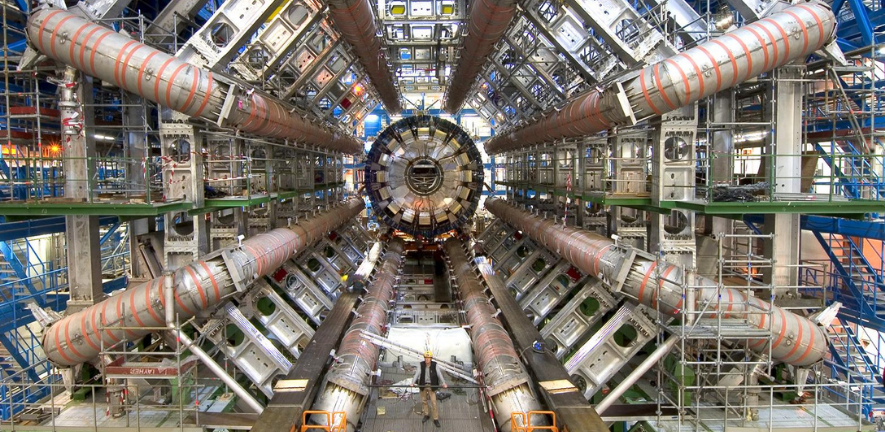
The ATLAS detector is one of the two major general purpose experiments for the LHC (Large Hadron Collider) at CERN. There are more than 3000 physicists and engineers from over 174 institutions in 38 countries, including over 1000 students, working together on ATLAS.
Cambridge LHCb group
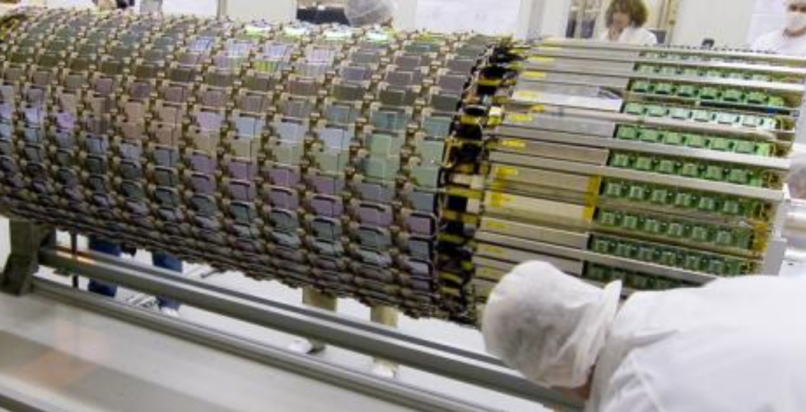
We are members of the CERN LHCb collaboration. LHCb is an experiment at the CERN LHC collider, which has been taking data since 2009. LHCb was primarily designed to investigate the decays of B-particles (particles containing b-quarks) and so provide an insight into the phenomenon of CP-violation. The collaboration comprises almost 1000 physicists and engineers from more than 65 institutes from all over the world.
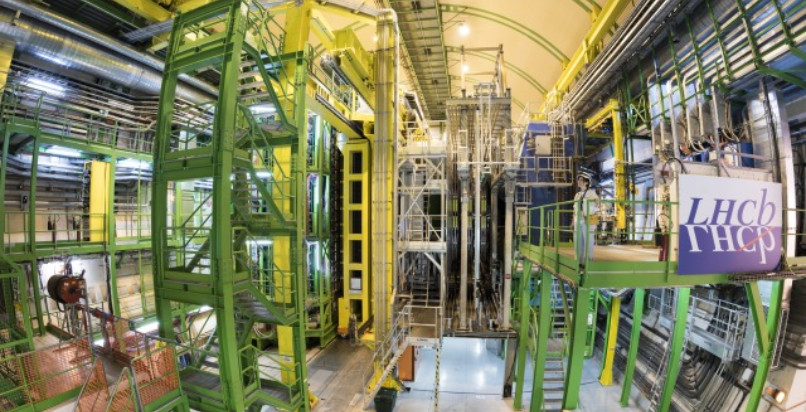
Credit: CERN
Cambridge MicroBooNe Group
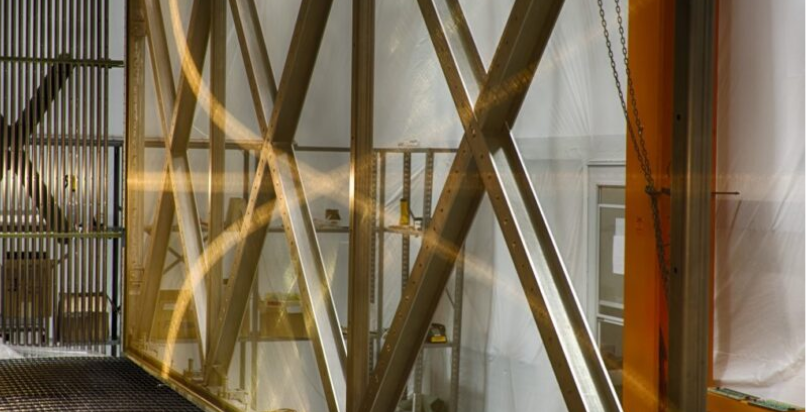
Located at Fermilab, the MicroBooNE experiment is a large, 170-ton Liquid Argon Time Projection Chamber (LArTPC) located along the Booster neutrino beam line (BooNE is an acronym for the Booster Neutrino Experiment).
Credit: Fermilab
Cambridge DUNE Group
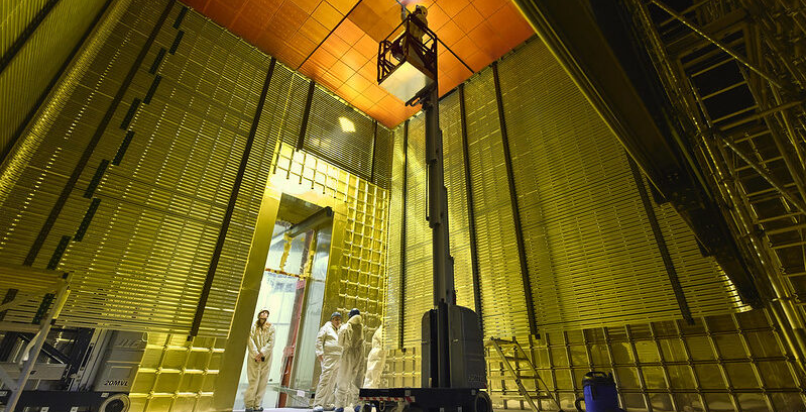
The international neutrino physics community has come together to develop the Deep Underground Neutrino Experiment (DUNE), a cutting-edge experiment for neutrino science, including neutrino oscillation and CP violation, as well as proton decay studies.
Credit: Fermilab