Dr Ian Jacobs
Royal Society University Research Fellow
Ian Jacobs is a Royal Society University Research Fellow in the Cavendish Laboratory Optoelectronics Group at the University of Cambridge. He holds a B.E. in chemical engineering from The Cooper Union and a Ph.D. in materials science and engineering from the University of California, Davis. Following his PhD, he held a Royal Society Newton International Fellowship here in the Cavendish.
Research
Heat is an unavoidable product of all energy conversion processes—it is the final product of essentially all energy we consume. Yet, nearly half of all final energy consumed in the UK is converted directly to heat—more than used to generate electricity or for transportation. Although the way we generate and use electricity seen a revolution over the past century, it is remarkable that the primary way we heat our buildings—burning organic materials—has essentially not changed for millennia. Even heat pumps, which are currently the leading technology for efficient space heating, are not fundamentally different than the first refrigeration cycles commercialised in the late 1920s.
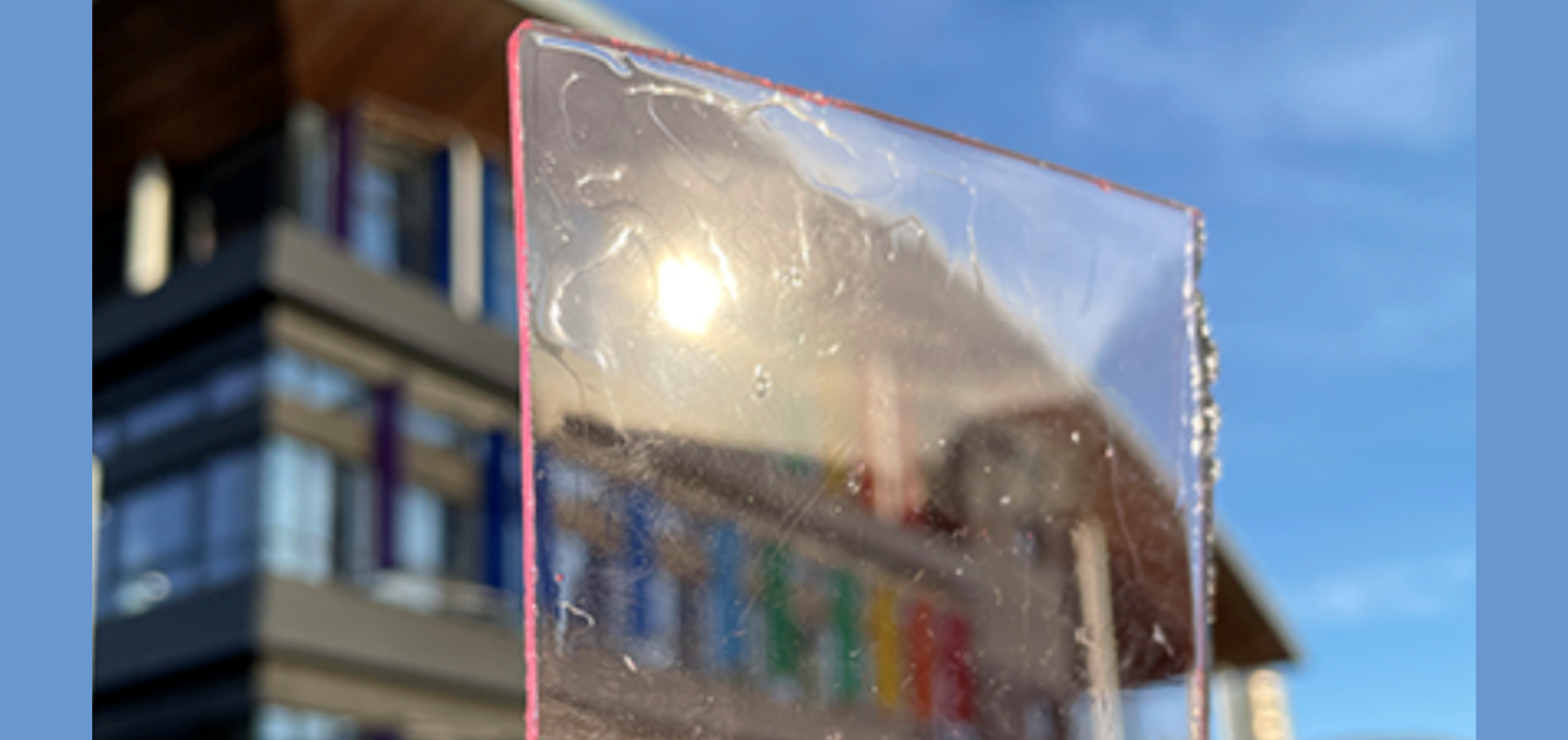
Our group aims to develop new materials and devices for energy-efficient heating and cooling, focusing largely on solid-state devices that could be scaled to large areas and flexible form factors, and have few or no moving parts. One major focus is on thermoelectrics—solid state heat engines—built from solution-processable semiconductors such as conjugated polymers. We study the underlying physics of these materials via a range of spectroscopic, electrical, and structural characterisation techniques, with the aim of using these insights to inform new optimisation approaches. We also work on radiative cooling and heating materials, where the absorption and thermal emission bands of the material are tuned to maximize passive heating from sunlight or passive cooling from the cold of outer space. These materials could potentially provide huge reductions in energy use for building climate control, and hopefully make a real impact on our carbon footprint.
Return to People Directory