Celebrating Helen Marshall and Richard King
20 July 2026
After decades of dedicated service to the Cavendish Laboratory, Helen Marshall, Senior Teaching Office Administrator, and Richard King, Undergraduate Laboratory Manager, retired from their roles last month. Helen has supported the Undergraduate Office for more than 21 years, while Richard has spent nearly 18 years working in and subsequently managing the Undergraduate Teaching Laboratories. Between them, they have helped shape the experience of thousands of students, ensuring that teaching runs smoothly behind the scenes and offering unwavering support to staff and students alike.
Before they said their goodbyes, we sat down with Helen and Richard to reflect on their journeys to the Cavendish, the changes they have witnessed over the years, the friendships they have built, and the memories they are taking with them into their next adventures.
Interview with Helen Marshall and Richard King
Take us back to how you both ended up here in the first place.
Helen: I joined the Cavendish after taking a career break to raise my son. Before the Cavendish, I spent three years living in Toulouse (France). When I came back to the UK, near Cambridge, I was looking for part-time work and took a temporary administrative role. A colleague then spotted an opening in the teaching office at the Cavendish and encouraged me to apply.
I started in a part-time, job-sharing role, but as the teaching office grew, so did my role. Working alongside colleagues like Rachael Padman and David Ward, we gradually brought teaching administration, timetabling, exams and student support together into one office. Looking back, what began as quite a small administrative position grew into something I am incredibly proud to have been a part of.
Richard: I grew up in Grantchester, just outside Cambridge, so I had always known about the Cavendish Laboratory. Back then, though, I never imagined that one day I would end up working there.
My background is in electronics and engineering. Before joining the Cavendish, I spent many years at Acorn Computers and later at Pace Micro Technology. After that, I worked for myself for a couple of years. It was during this time that I came across an advertisement for a technician role at the Cavendish. I was probably overqualified for the position, but I was keen to become part of the Cavendish Laboratory.
Once I joined, I could combine my technical expertise with my project management experience. Over the years, I gradually took on greater responsibility, eventually managing the teaching laboratories – a role that allowed me to support the practical (hands-on) and some of the administrative and planning duties required to further develop the Teaching Labs at the Cavendish.
Do you remember your first day?
Helen: I certainly do! I was shown into an office, given a computer and largely left to get on with things. There wasn’t a great deal of structure in those first couple of weeks, so I took the opportunity to familiarise myself with the teaching labs. Rachael Padman, who had interviewed me for the role after taking over as Secretary to the Teaching Committee, was instrumental in modernising teaching support through the introduction of the Teaching Information System (TIS). Her guidance and support enabled me to grow into the role and helped shape both the teaching office and the systems that supported it.
Richard: It was quite similar for me. I was introduced to lots of people whose names I immediately forgot before being shown to a prep room with a desk and a pile of papers. Thankfully, Rachael quickly realised I needed a bit more support and helped me get properly established with the equipment and resources I needed, including a PC!.

Left: Richard in the Undergraduate Lab with students doing experiments in the background. Right: Helen setting up the exam hall.
If you had to explain your jobs to someone who had never been to the Cavendish, what would you say?
Richard: In simple terms, we support everyone and everything involved in teaching, except the actual delivery of the teaching itself. We make sure academics have all they need to deliver practical classes and that students have the best possible experience. If the laboratories are ready, the equipment works and everything runs smoothly, then we have done our job. Helping students to develop and practice their practical skills is not just an essential element of their course studies but provides confidence and skills they can draw upon in their future careers even if that lies outside of Physics.
Helen: I would say my role was about making teaching happen behind the scenes. Whether it was organising exams, timetables, handouts or supporting students, the goal was always to make things as seamless as possible for both staff and students. I always tried to put myself in the students’ position – waiting for a response can have a real effect on them. For me, it might be just one of many emails, but for the student it could be something they’re anxiously waiting for, so I always made a point of responding promptly and treating each enquiry individually.
It is easy to forget just how much happens behind the scenes. Is there anything about your roles that people might find surprising?
Richard: I think people would be surprised by the sheer scale of it all. We support hundreds of students across the first 3 undergraduate years, and every practical session has to be completely prepared before anyone walks through the door. Those deadlines simply can’t move.
Helen: It is much the same for me. Exams, student administration and teaching all run to strict deadlines. Students rely on timely responses, so there isn’t really the option to leave things until tomorrow.
What kept you both here for so many years?
Helen: I found my niche here. I have always enjoyed administration, but more importantly, I felt valued. The role gave me confidence and the opportunity to build something meaningful. Although the academic year follows the same pattern, every year brings different students and new challenges, so it never became repetitive.
Richard: For me, it was the combination of the people and the job satisfaction. I enjoy solving practical problems and seeing the results straight away. It’s also been a privilege to work in the Cavendish, where colleagues genuinely appreciate what you do and make you feel part of the team. I have also always enjoyed conversations with many of our wonderful academic colleagues who take time to share and explain (in simple terms!) some of their amazing research.
You have worked so closely together over the years. How would you describe that partnership?
Richard: Although Helen managed the teaching office and I managed the teaching laboratories, our work has always been closely connected. We have covered for each other, worked through countless challenges together and supported one another, particularly during the pandemic.
Helen: Our reporting lines changed over the years, but in practice we have always worked as one team with the same goal: making sure teaching runs as smoothly as possible.
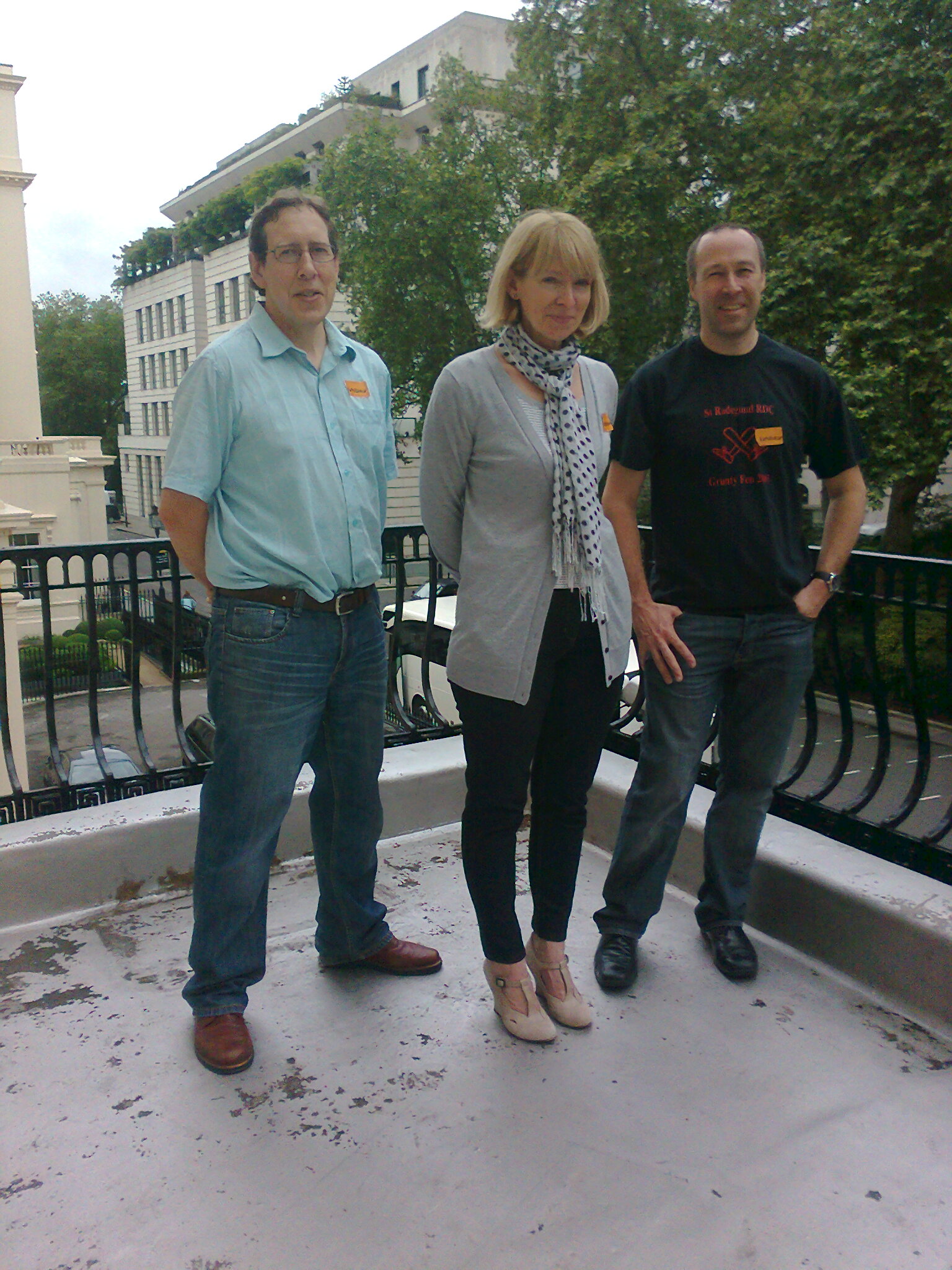
Richard King, Helen Marshall and Professor John Richer at the Royal Society in London in July 2012, where they helped set up an exhibition.
After so many years, there must be some memorable moments!
Richard: There are quite a few! One of the funniest involved a security camera that had been installed to catch students sneaking into a room. We decided to play a prank by draping a dust sheet over me and having me wander across the room like a ghost. It worked brilliantly, until someone recognised my overly large feet sticking out from underneath, and I was quickly discovered playing the prank on camera.
Another favourite memory was chasing a duck that somehow wandered into one of the teaching laboratories. It involved a blanket, lots of laughter from the students and a rather undignified sprint around the room before we finally escorted it safely back outside.
It sounds like no two days were ever quite the same?
Richard: That is true, although there is a rhythm to the year. The experiments change every couple of weeks, so things stay interesting, and every new group of students brings different questions and different challenges.
Helen: The academic calendar creates a familiar pattern too. Around the same time every year I am organising the same milestones and preparing for exams, but every day still brings unexpected questions or problems that need solving.
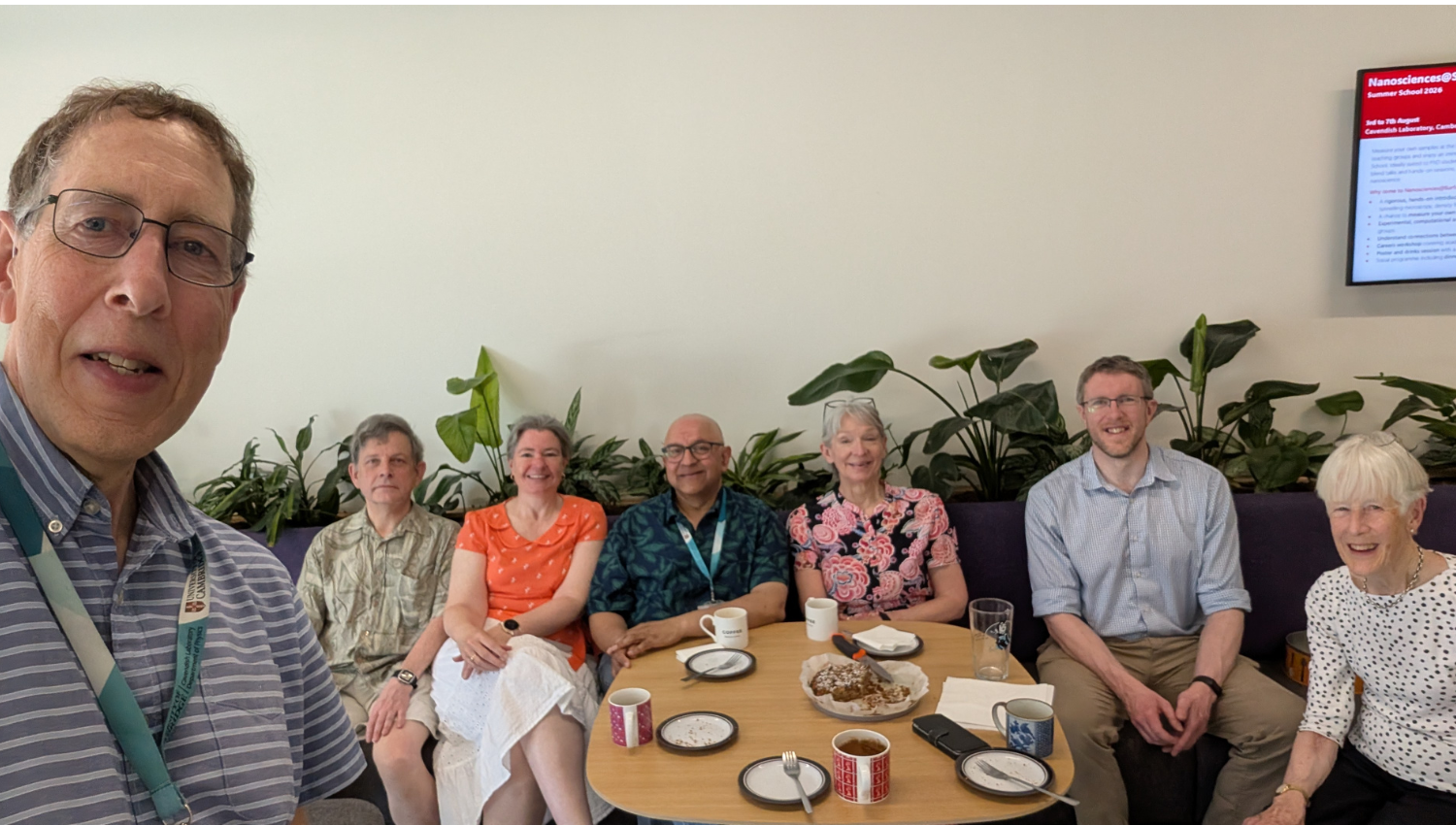
Richard and Helen are pictured with several of their colleagues at the Cavendish Laboratory.
Finally, how have the people at the Cavendish shaped your experience?
Helen: The people have made all the difference. I have always felt supported and appreciated by colleagues, and that encouragement gave me confidence and pride in what I was doing. Over the years, I have built some wonderful friendships which will continue into the future.
Richard: The people have been one of the best parts of the job. I have been very fortunate to work alongside colleagues who have always been incredibly supportive and made me feel part of the team. I would particularly like to thank Dr Julia Riley, who has been the overall Head of Class for the IA practicals throughout my time here. Her support has been tremendous, and I have always been grateful for the encouragement she has given me over the years.
I would also like to thank my colleagues Mark Smith and John Flynn, who have worked alongside me in the teaching laboratories. We have made a great team, and it has been a real pleasure working with them over the years. The friendships, teamwork and shared experiences are something I will really miss.
Helen and Richard leave behind an extraordinary legacy, having made an immeasurable contribution to the Cavendish Laboratory and enriched the experience of thousands of students over the years. We thank them both for their outstanding service and wish them every happiness and success in their well-deserved retirement.
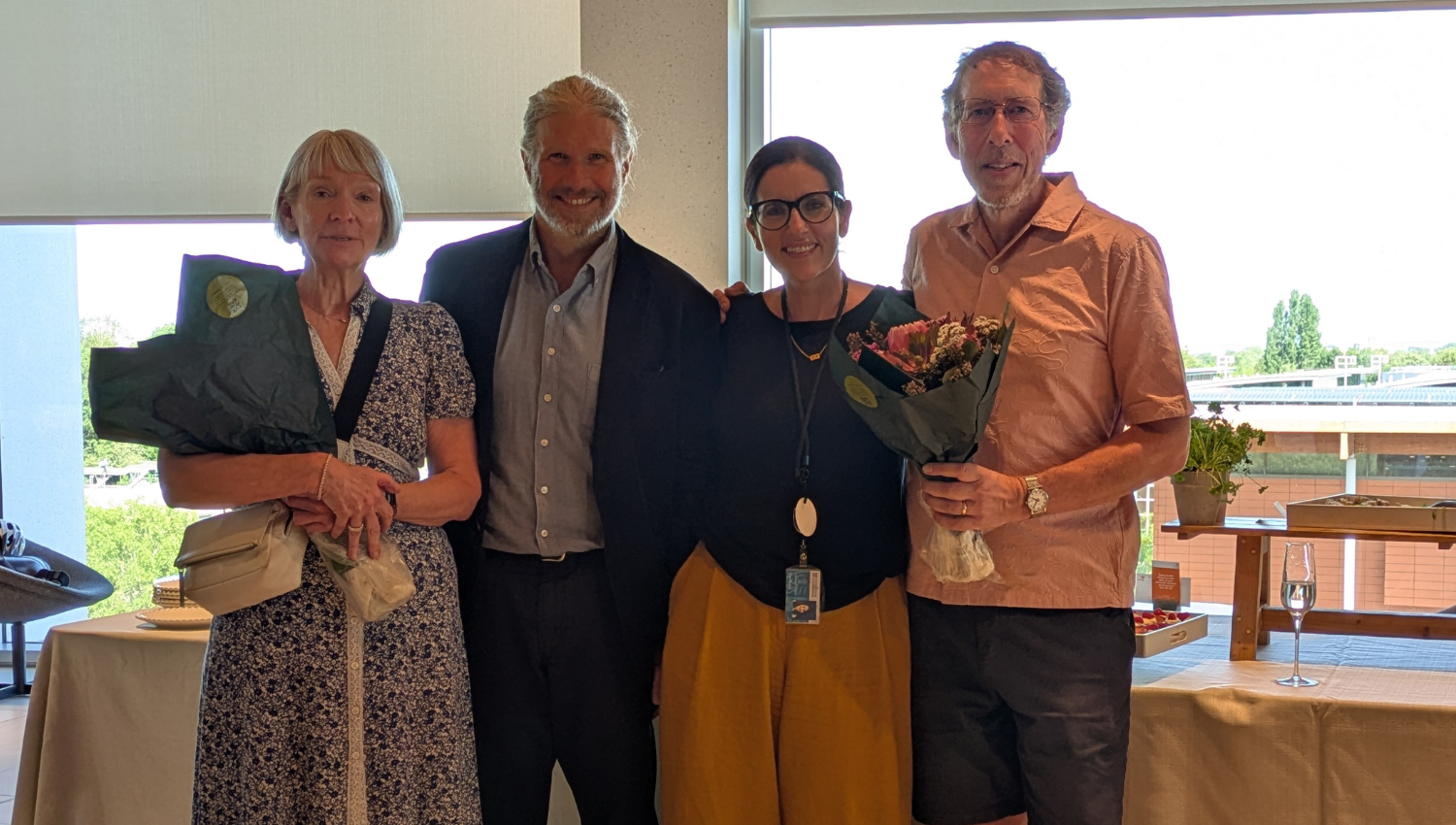
Image description: Left to right: Helen Marshall; Prof. Mete Atatüre, Head of Department; Sam Stokes, Head of Operations; and Richard King during Helen and Richard’s farewell party.

The text in this work is licensed under a Creative Commons Attribution-NonCommercial-ShareAlike 4.0 International License. Images, including our videos, are Copyright ©University of Cambridge and licensors/contributors as identified. All rights reserved. We make our image and video content available in a number of ways – on our main website under its Terms and conditions, and on a range of channels including social media that permit your use and sharing of our content under their respective Terms.