Connect with us
News
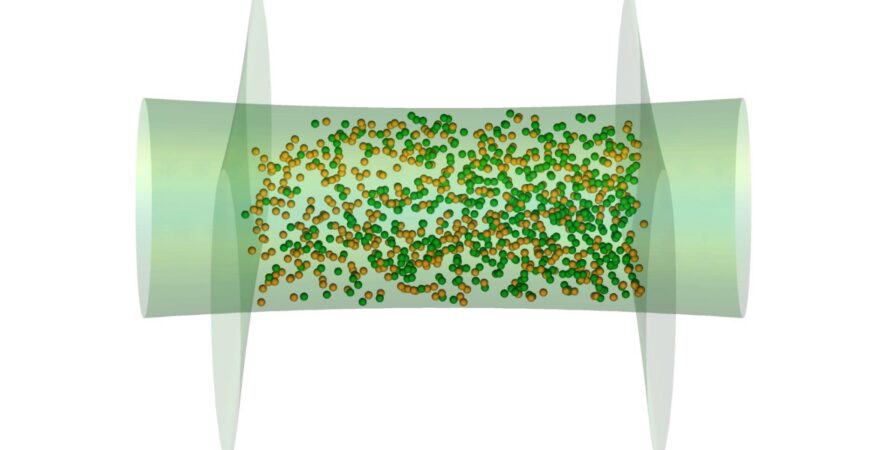
You can hear every event twice in a three-dimensional quantum gas
You heard it here first, and then again. If you could immerse yourself in a quantum fluid, you would hear every event twice, because they support two sound waves with...
6 June 2022
News
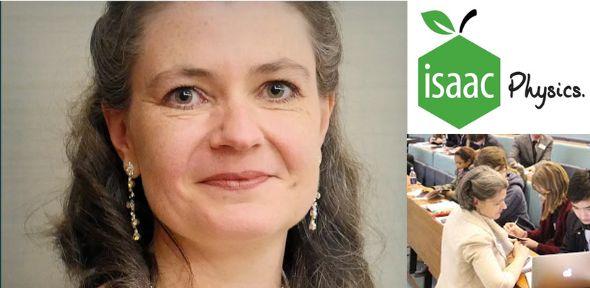
Dr. Lisa Jardine-Wright recognised in the Queen’s Birthday Honours 2022
Dr Jardine-Wright has received an OBE for services to education. She is an Affiliated Lecturer at the Department of Physics, Fellow of Churchill College, and co-founder of Isaac Physics. I...
2 June 2022
News
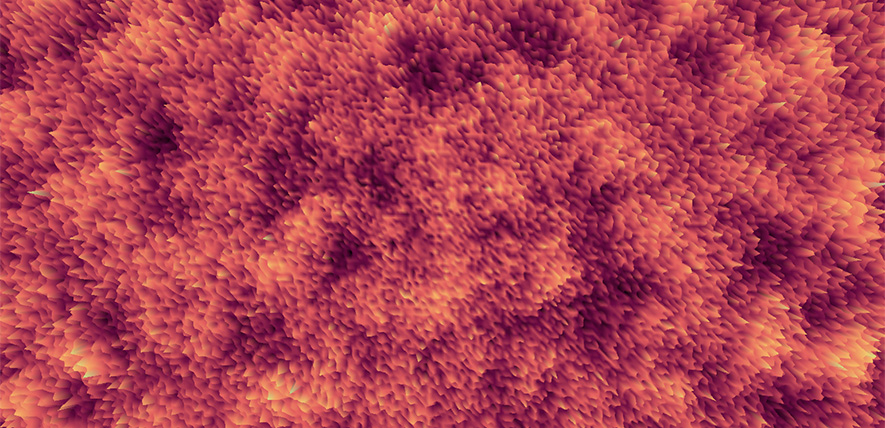
‘Fruitcake’ structure observed in organic polymers
Researchers have analysed the properties of an organic polymer with potential applications in flexible electronics and uncovered variations in hardness at the nanoscale, the first time such a fine structure has been observed in this type of material.
2 June 2022
News
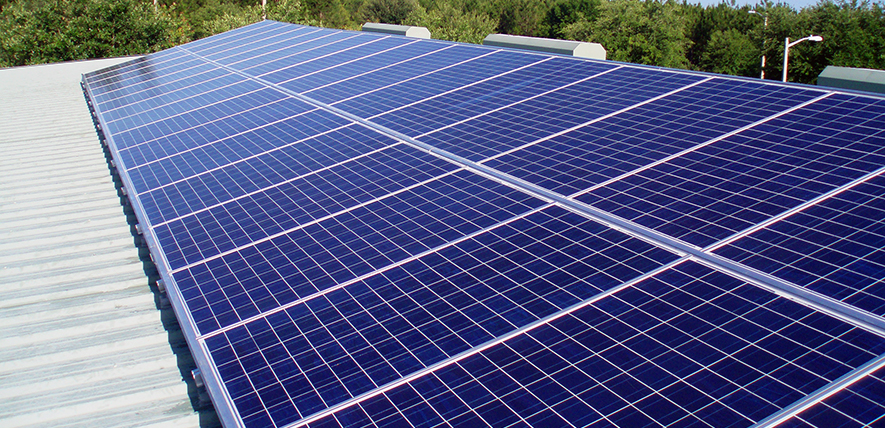
Secret to treating ‘Achilles’ heel’ of alternatives to silicon solar panels revealed
A team of researchers from the UK and Japan has found that the tiny defects which limit the efficiency of perovskites – cheaper alternative materials for solar cells – are also responsible for structural changes in the material that lead to degradation.
24 May 2022
News
One step closer to making terahertz technology usable in the real world
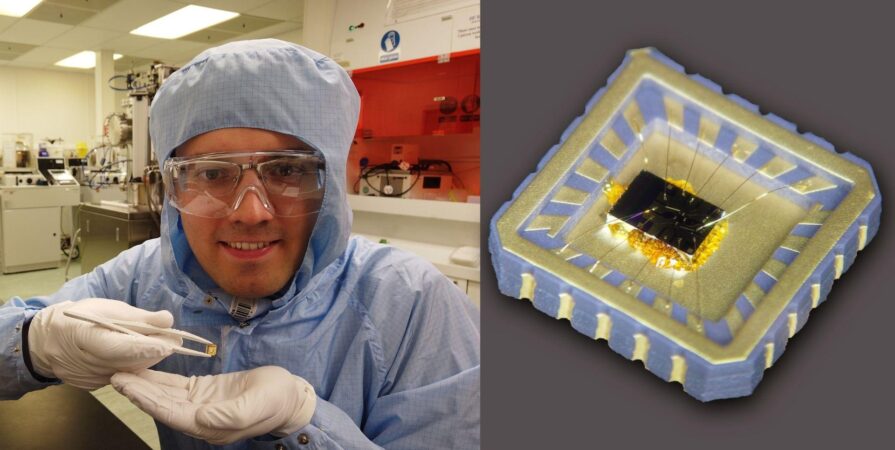
Researchers have discovered a new effect in two-dimensional conductive systems that promises improved performance of terahertz detectors. The fact that such effects can exist within highly conductive, two-dimensional electron gases...
23 May 2022
News

The new EPSRC Programme Grant will investigate and tackle some fundamental research challenges that could lead to a new generation of soft functional materials for applications in photodetection and photovoltaics,...
17 May 2022
News
Cambridge’s global reputation in Physics and Astronomy recognised in REF 2021
The results from the latest Research Excellence Framework (REF) have highlighted the global impact of Cambridge’s research in the field of Physics and Astronomy. 99% of Cambridge’s overall submissions...
12 May 2022
News
Dr. Roberto Maiolino is honoured with the prestigious Royal Society Fellowship
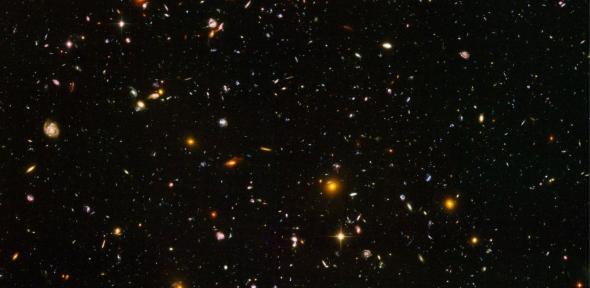
Dr. Roberto Maiolino has been awarded the Royal Society fellowship for his cutting edge research in extragalactic astronomy. His research focuses upon the formation of galaxies using observations collected at...
10 May 2022