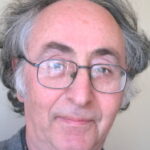
Prof Brian Josephson FRS
Emeritus Professor of Physics
Brian David Josephson is a theoretical physicist and an Emeritus Professor at the Cavendish Laboratory.
He joined the University of Cambridge in 1957, initially reading mathematics before switching to physics. Widely regarded as a brilliant student, he published influential work as an undergraduate, including a paper on the Mössbauer effect. He began doctoral research at the Cavendish Laboratory under Brian Pippard, and in 1962, Josephson developed the theoretical work on quantum tunnelling that led to the discovery of the Josephson effect, predicting that a supercurrent could flow between two superconductors separated by a thin barrier. Published in Physics Letters in 1962 and experimentally confirmed at Bell Labs in 1963, the discovery underpins technologies such as SQUIDs and precision voltage standards. In recognition of this work, Josephson was awarded the 1973 Nobel Prize in Physics, shared with Leo Esaki and Ivar Giaever.
Brian David Josephson spent a postdoctoral year in the United States as a Research Assistant Professor at the University of Illinois at Urbana-Champaign (1965–1966) before returning to Cambridge, where he was appointed Assistant Director of Research at the Cavendish Laboratory in 1967. He remained a member of the Theory of Condensed Matter Group throughout his career. Elected a Fellow of the Royal Society in 1970, he was also awarded a National Science Foundation Fellowship by Cornell University the same year. Josephson became Reader in Physics in 1972 and was appointed Professor of Physics in 1974, a position he held until his retirement in 2007.
Return to People Directory