Fundamental Physics of Quantum Matter

The emergence of collective, oftentimes macroscopically observable behaviour from interacting quantum systems yields surprising phenomena and new insights. 

Striking examples include superconductivity (the collective flow of electrons with zero resistance), and the fractional quantum Hall effect (where many electrons act in concert to counter intuitively create new particles with a charge smaller than that of any individual electron). 

The discovery and understanding of novel forms of collective quantum behaviour are at the frontier of fundamental condensed matter exploration. These phenomena have the further potential to make their way into technological applications – for example, the achievement of room-temperature superconductivity would have an extraordinary impact upon society at large.

Research areas

Cold atomic gases

Experimental studies of cold atomic gases are targeted at the study of novel phase behaviour in correlated atomic systems, from the quantum behaviour of systems far from equilibrium to quench dynamics and turbulence in atomic condensates.
Correlated electronic materials

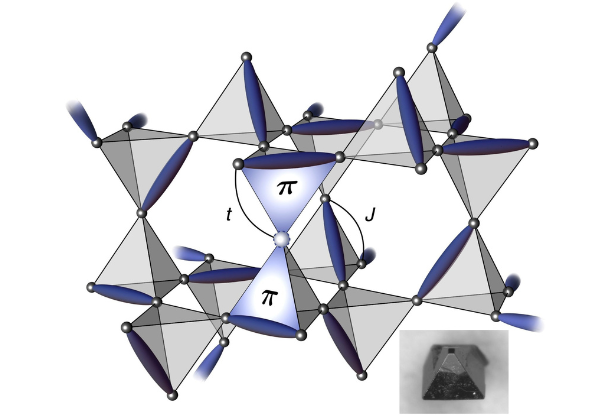
In the area of correlated electronic matter, materials synthesis, tuning, and high precision measurements are used to uncover novel quantum collective phenomena such as unconventional superconductivity, quantum phase transitions, new forms of magnetism, and quantum multi-functionality.

Low-dimensional and hybrid quantum systems

Studies of low-dimensional and hybrid quantum systems include manifestations of quantum coherence effects, from quantum transport phenomena to topological insulating behaviour. Hybrid light-matter systems are used to study optical control of quantum-dot spins, diamond-based emitters, solid-state cavity quantum electrodynamics, and nanoplasmonics.

Theoretical challenges

Understanding these systems poses some of the tallest theoretical challenges, involving diverse aspects of quantum many-body systems, from coherence phenomena in atomic, electron and light-matter systems, to frustrated magnetism and topological phases of matter.


Researchers and Research Groups associated with this theme

Prof Crispin Barnes

Professor of Quantum Physics

Prof Siân Dutton

Deputy Head of Department and Professor in Physics and Solid State Chemistry

Prof Chris Ford

Professor of Quantum Electronics

Prof Malte Grosche

Professor of Condensed Matter Physics

Prof Andrew Jardine

Deputy Head of Department and Professor in Experimental Physics

Prof Richard Phillips

Emeritus Professor

Prof Akshay Rao

Professor of Physics

Prof Suchitra Sebastian

Professor in Physics

Prof Charles Smith

Professor

Prof Benjamin Beri

Academic Professor

Prof Claudio Castelnovo

Professor of Theoretical Physics

Prof Mike Payne FRS

Emeritus Professor

Prof Zoran Hadzibabic

Professor or Physics

Related News

Connect with us

News

Polarisation of blue laser light being adjusted before cooling atoms to near absolute zero. Credit: Dr Thomas Walker. © Imperial College London.

Cancelling laser noise in atomic quantum sensors 

Results from a UK collaboration overcome major obstacle towards building large-scale atom interferometers.    A prototype quantum sensor developed by the Atom Interferometer Observatory and Network (AION) consortium has demonstrated, for the first time, that a...

19 June 2026